- 7 min read


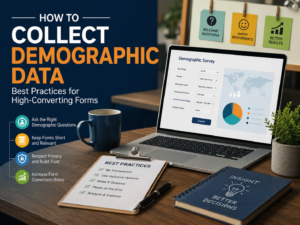

A Research Survey is one of the most reliable ways to collect and analyze data. It allows researchers to gather insights about opinions, behaviors, experiences, and trends. Research surveys are used in education, healthcare, business, government, and social sciences. The goal is to get structured responses that can be studied and turned into useful knowledge.
To conduct a research survey effectively, researchers need more than just paper forms or email questionnaires. They need a strong Research Survey Platform. This type of platform makes it easier to design professional surveys, collect responses securely, and analyze data in real time. Without the right platform, research surveys can become inaccurate, time-consuming, and difficult to manage.
In this detailed guide, we will explain what a research survey platform is, why it is important, what features to look for, and which tools are best in 2025.
What is a Research Survey Platform?
A research survey platform is a software tool designed to create, distribute, and manage surveys specifically for research purposes. Unlike simple online forms, a research survey platform is built with advanced features to handle complex studies.
For example:
- A student conducting a research survey on climate change awareness can use branching questions to separate groups based on knowledge level.
- A healthcare researcher can use secure survey platforms to collect patient feedback while protecting sensitive information.
- A business analyst can use randomization to test different versions of a product survey.
These features ensure that the research survey is not only easy to run but also produces valid and reliable results.
Why Researchers Need a Survey Platform
Conducting a research survey manually can be difficult. It involves designing forms, printing papers, distributing them, and entering data into spreadsheets. This process is slow and often full of errors. A research survey platform solves these problems by providing a digital solution.
Key reasons why researchers need a survey platform:
- Efficiency: Surveys can be created in minutes and shared with thousands of respondents online.
- Data quality: Built-in tools like skip logic and validation reduce wrong answers and incomplete responses.
- Security: Research often deals with sensitive data. Platforms provide encryption and privacy protection.
- Analysis: Instead of manually entering data, responses are automatically collected and analyzed.
- Scalability: From a small classroom survey to a global research project, the same platform can handle both.
Example: A university professor conducting a research survey on student satisfaction can use a survey platform to reach 10,000 students instantly. Without such a platform, this task would take months.
Key Features to Look For in a Research Survey Platform
Choosing the right tool is essential for success. A strong research survey platform should include the following features:
1. Flexible Survey Design
- Multiple question types (multiple choice, open text, rating scales, Likert scales).
- Pre-built templates for common research survey designs.
- Branding options to add logos, colors, and styles.
2. Data Quality Controls
- Skip logic: Directs respondents to different questions based on previous answers.
- Randomization: Changes the order of questions to reduce bias.
- Response validation: Prevents incomplete or invalid entries.
3. Scalability
- Handles both small studies and large surveys with thousands of participants.
- Ability to distribute surveys via email, social media, websites, or QR codes.
4. Analytics and Reporting
- Real-time dashboards to track progress.
- Charts and graphs for easy visualization.
- Export options (SPSS, Excel, CSV, PDF) for deeper analysis.
5. Collaboration Tools
- Allow multiple researchers to design, edit, and review surveys.
- Role-based access to control who can view or edit data.
6. Security and Compliance
- Strong encryption for sensitive responses.
- Compliance with GDPR, HIPAA, or other local data protection laws.
- Anonymous survey options for sensitive research.
These features ensure that the research survey is professional, accurate, and secure.
Benefits of Using a Dedicated Research Survey Platform
Using the right platform offers several advantages over traditional methods:
- Saves time: Creating, distributing, and analyzing a survey can be done in hours instead of weeks.
- Better response rates: Online surveys are easier for respondents to complete.
- Accurate results: Built-in validation reduces errors.
- Global reach: Researchers can gather responses from participants in different countries.
- Advanced insights: Analytics tools help researchers find hidden patterns and trends.
- Cost-effective: Digital surveys reduce printing and manual data entry costs.
Example: A global non-profit using a research survey to study health awareness can collect 50,000 responses in weeks, instead of spending months mailing paper surveys.
Popular Research Survey Platforms in 2025
Here are some of the best platforms for research surveys today:
- SurveyFlip: A powerful and user-friendly research survey platform designed for professionals and institutions.
- SurveyMonkey: Easy to use, good for academic and business surveys.
- Qualtrics: Advanced features for large-scale academic and enterprise research.
- Google Forms: Free option for small projects or student research surveys.
- Typeform: Engaging and interactive design for better user experience.
- LimeSurvey: Open-source tool for researchers who want full customization.
Each research survey platform has unique strengths. Researchers should choose based on project size, budget, and data needs.
How to Choose the Best Research Survey Platform
Selecting the right platform is critical. Researchers should:
- Define research goals – Decide if the survey is academic, market-focused, or social.
- Set a budget – Free tools are good for small projects, but large studies need premium features.
- Check compatibility – Ensure the platform works with existing tools like SPSS, R, or Excel.
- Test usability – The survey should be easy for respondents on both desktop and mobile.
- Review security – Always check for data protection and compliance.
- Consider support – Good customer support helps solve problems quickly.
Common Mistakes in Research Surveys
Many researchers make avoidable mistakes:
- Overcomplicated surveys – Too many questions reduce completion rates.
- Lack of testing – Surveys should be tested on a small group before launch.
- Ignoring mobile users – Most respondents use smartphones, so surveys must be mobile-friendly.
- Weak privacy policies – Not following data laws can harm credibility.
Avoiding these mistakes ensures a successful research survey.
Future of Research Survey Platforms
The future of research surveys is exciting. Technology is making surveys smarter, faster, and more reliable.
- AI-driven personalization: Surveys that adapt to respondent behavior in real time.
- Predictive analytics: Platforms that not only collect data but also predict outcomes.
- Big data integration: Connecting survey data with large datasets for deeper insights.
- Mobile-first design: Optimized for respondents who prefer mobile devices.
- Voice surveys: Using smart speakers and voice assistants to answer surveys.
These trends will make research survey platforms more powerful and efficient.
Conclusion
A research survey is one of the best ways to collect data and gain insights. But the success of any survey depends on the platform used. A reliable research survey platform provides better design, data quality, security, and analysis.
Researchers should focus on features, scalability, and compliance when choosing a tool. By avoiding common mistakes and embracing modern trends, research surveys can produce valuable results that drive knowledge, policy, and innovation.
With the right platform, every research survey can move from raw responses to meaningful insights.
📌 FAQs
1. What is a research survey?
A research survey is a structured method of collecting data from respondents to study opinions, behaviors, or experiences. It is widely used in academic, business, and social research.
2. Why is a research survey platform important?
A research survey platform makes it easier to design professional surveys, collect accurate responses, ensure data security, and analyze results quickly.
3. Which research survey platforms are best in 2025?
Some of the best platforms for research surveys include SurveyFlip, SurveyMonkey, Qualtrics, Google Forms, Typeform, and LimeSurvey.
4. How do I choose the best platform for my research survey?
To choose the right research survey platform, consider your research goals, budget, scalability, data security, mobile-friendliness, and analytics features.
5. What mistakes should I avoid when running a research survey?
Common mistakes include making surveys too long, not testing before launch, ignoring mobile users, and failing to follow privacy or compliance rules.
6. What is the future of research survey platforms? The future of research survey platforms includes AI-driven personalization, predictive analytics, big data integration, mobile-first surveys, and voice-enabled responses.