- 9 min read

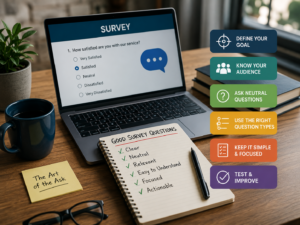


Businesses in 2026 are making decisions faster than ever before. Customer expectations are constantly evolving, markets change rapidly, and competition is becoming increasingly data-driven. In this environment, collecting accurate customer feedback is no longer optional—it is essential for survival and growth.
For years, traditional surveys helped businesses gather opinions, measure satisfaction, and conduct market research. However, the rise of artificial intelligence is now reshaping the entire survey industry. Modern companies are increasingly adopting the AI survey tool to automate data collection, improve response quality, and generate real-time insights.
This shift has created an important question for businesses: when it comes to customer understanding, which delivers better results—AI-powered surveys or traditional survey methods?
The answer depends on speed, personalization, automation, data quality, and the ability to turn feedback into actionable insights.
The Evolution of Customer Feedback Collection
Traditional surveys were designed for a slower business world. Companies would create questionnaires manually, send them through email or websites, wait for responses, and analyze the data later using spreadsheets or reports.
This process worked reasonably well for many years, but it came with major limitations:
- Long setup times
- Manual analysis
- Generic questions
- Delayed insights
- Low engagement rates
Modern businesses now operate in real time, and customer feedback systems need to move at the same speed.
This is where the modern AI survey tool changes everything.
AI-powered platforms automate survey creation, personalize questions, analyze responses instantly, and generate intelligent recommendations automatically. Instead of simply collecting responses, AI-driven systems actively help businesses understand customers faster and more accurately.
What Is an AI Survey Tool?
An AI survey tool is a survey platform that uses artificial intelligence to automate and optimize different stages of survey creation, distribution, and analysis.
Unlike traditional survey systems, AI-powered platforms can:
- Generate surveys automatically
- Personalize question flow
- Detect sentiment and emotions
- Analyze responses in real time
- Identify behavioral patterns
- Generate actionable insights instantly
Many modern platforms also include an AI survey generator, allowing businesses to create complete surveys simply by describing their goals in natural language.
For example, a company can type:
“Create a customer satisfaction survey for a SaaS onboarding experience.”
The AI can instantly generate structured questions optimized for higher engagement and better data quality.
This level of automation dramatically reduces manual work while improving the effectiveness of surveys.
Traditional Surveys: Still Useful but Increasingly Limited
Traditional survey methods are not completely obsolete. They still work for simple questionnaires and small-scale research projects. Many businesses continue using them because they are familiar and easy to implement.
However, traditional systems struggle in several key areas.
One of the biggest limitations is personalization. Most traditional surveys send identical questions to every respondent, regardless of their behavior or customer journey stage. This often creates generic experiences that reduce engagement and lower response quality.
Another issue is delayed reporting. Businesses often spend days or weeks analyzing responses manually before insights become actionable.
In 2026, where customer behavior changes rapidly, slow insights can become outdated very quickly.
This is why many organizations are transitioning from traditional systems toward smarter Online Survey Tools Powered by AI.
AI vs Traditional Surveys: Speed and Efficiency
One of the biggest advantages of an AI survey tool is speed.
Traditional surveys require manual setup, editing, testing, distribution, and reporting. This process consumes significant time and resources, especially for large businesses managing multiple surveys simultaneously.
AI-powered systems dramatically reduce this workload.
With an AI survey generator, businesses can create optimized surveys within seconds instead of hours. AI can also automate:
- Distribution timing
- Audience targeting
- Data analysis
- Reporting and summaries
This allows teams to focus on decision-making instead of administrative work.
In competitive industries such as SaaS, e-commerce, and digital marketing, faster insights often lead to faster growth.
Personalization: Where AI Strongly Outperforms Traditional Surveys
Modern customers expect personalized digital experiences. Static survey forms with irrelevant questions often feel outdated and frustrating.
AI-powered survey systems adapt dynamically based on user behavior, demographics, and previous responses.
For example:
- Returning customers may receive different questions than first-time users
- SaaS users may receive surveys based on feature usage
- High-value customers may receive more detailed experience questions
This personalized experience improves engagement and increases response quality.
Traditional surveys struggle to deliver this level of intelligent adaptability.
This is one of the biggest reasons why businesses increasingly prefer AI-driven online survey tools.
Real-Time Analytics and Instant Insights
Traditional survey systems often rely heavily on manual reporting and spreadsheet analysis. Businesses collect responses first and interpret them later.
AI-powered platforms completely change this process.
Modern AI survey tools can analyze responses in real time and immediately identify:
- Customer frustration trends
- Satisfaction changes
- Product issues
- Churn risks
- Market opportunities
Instead of waiting for reports, businesses receive instant insights they can act on immediately.
This speed creates a major competitive advantage.
AI Improves Survey Response Rates
Low response rates are one of the biggest challenges in survey research.
Traditional surveys often suffer from:
- Long forms
- Repetitive questions
- Poor timing
- Generic experiences
AI-powered systems solve many of these problems automatically.
An AI survey generator can optimize question structure, reduce survey length, personalize experiences, and determine the best time to send surveys.
As a result, businesses often see higher engagement and better-quality feedback.
Data Accuracy and Insight Quality
Collecting more responses does not always mean better insights. What matters most is data quality.
Traditional survey systems often struggle with:
- Incomplete responses
- Survey fatigue
- Irrelevant questions
- Poor segmentation
AI systems improve data quality by detecting suspicious responses, identifying inconsistencies, and optimizing survey logic dynamically.
AI can also analyze open-ended feedback much more effectively through sentiment analysis and pattern recognition.
This allows businesses to uncover deeper customer insights that traditional systems may miss entirely.
Cost and Scalability
Traditional surveys can become expensive and time-consuming at scale, especially when manual analysis and reporting are involved.
AI-powered online survey tools reduce operational costs by automating repetitive tasks and minimizing the need for large research teams.
For startups and SaaS companies, this creates a major advantage because smaller teams can still collect enterprise-level insights efficiently.
AI platforms also scale much more easily as businesses grow.
The Future of AI Survey Tools
The future of the survey industry is becoming increasingly intelligent and automated.
In the coming years, AI survey tools are expected to evolve toward:
- Conversational AI surveys
- Voice-based feedback collection
- Predictive customer behavior analysis
- Real-time adaptive surveys
- Deep CRM and analytics integrations
Surveys are gradually evolving from static forms into intelligent feedback ecosystems.
This transformation is reshaping how businesses understand customers and make strategic decisions.
So, Which One Delivers Better Customer Insights?
When comparing AI vs traditional surveys, the difference becomes clear.
Traditional surveys still have value for simple use cases and smaller research projects. However, they struggle to meet the demands of modern businesses that require speed, personalization, automation, and real-time intelligence.
An AI survey tool delivers:
- Faster survey creation
- Better personalization
- Higher engagement
- Real-time analytics
- Smarter automation
- Deeper customer insights
For businesses that want to stay competitive in 2026, AI-powered survey systems are no longer just an upgrade—they are becoming a necessity.
Final Thoughts
Customer feedback remains one of the most valuable assets for modern businesses. However, the way companies collect and analyze that feedback is changing rapidly.
The rise of the AI survey tool, the growing adoption of intelligent online survey tools, and the innovation behind the modern AI survey generator are transforming how businesses understand customer behavior.
In the debate around AI vs traditional surveys, AI is increasingly leading because it offers what modern organizations need most: speed, intelligence, personalization, and actionable insights in real time.
Businesses that adopt AI-powered survey systems early will be better positioned to improve customer experiences, make smarter decisions, and grow faster in the increasingly data-driven economy of 2026.
Frequently Asked Questions (FAQ)
1. What is an AI survey tool?
An AI survey tool is a survey platform that uses artificial intelligence to automate survey creation, personalize questions, analyze responses, and generate real-time insights.
2. How is an AI survey tool different from traditional surveys?
Traditional surveys rely heavily on manual setup and analysis, while an AI survey tool automates much of the process and delivers faster, smarter, and more personalized customer insights.
3. What is an AI survey generator?
An AI survey generator is a feature that creates surveys automatically based on a user’s goals or prompts. It helps businesses save time and improve survey quality.
4. Are AI survey tools better than traditional online survey tools?
In most modern business environments, yes. AI-powered online survey tools provide faster analytics, better personalization, and real-time insights compared to traditional survey systems.
5. Can AI survey tools improve survey response rates?
Yes. AI systems optimize question flow, personalize surveys, and improve timing, which often leads to higher engagement and better response rates.
6. Are traditional surveys still useful in 2026?
Traditional surveys can still work for simple feedback collection and small-scale research, but they often lack the speed, automation, and intelligence modern businesses need.
7. How do AI survey tools analyze customer feedback?
AI-powered platforms use technologies like sentiment analysis, pattern recognition, and automated reporting to identify trends and generate actionable insights from survey responses.
8. What industries benefit most from AI survey tools?
SaaS companies, startups, e-commerce brands, healthcare organizations, educational institutions, and enterprises all benefit from AI-powered survey systems.
9. Can small businesses use AI survey tools?
Absolutely. Many AI-driven online survey tools are affordable and scalable, making them useful for startups and small businesses that want faster customer insights.
10. What is the future of AI vs traditional surveys?
The future is moving toward AI-powered automation, conversational surveys, predictive analytics, and real-time customer intelligence, making AI-driven surveys the preferred choice for modern businesses.