- 12 min read

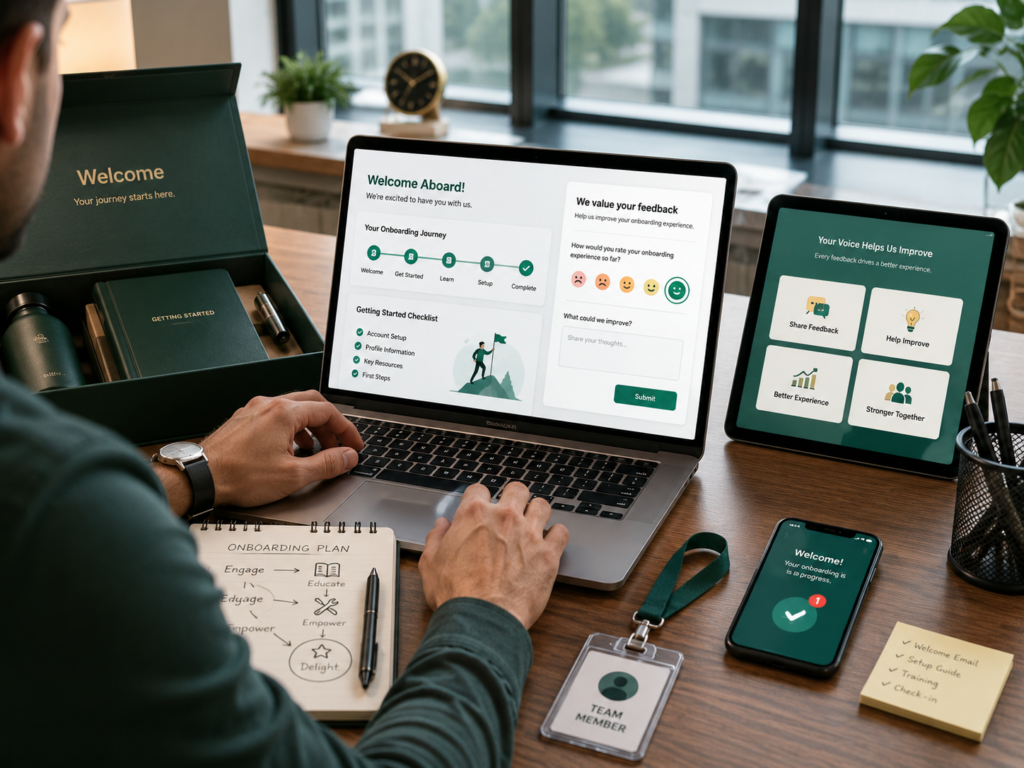
First impressions matter. Whether you’re onboarding a new customer, employee, student, or software user, the first few days often determine long-term engagement and retention.
Many organizations invest significant resources into onboarding experiences but fail to measure how those experiences are actually perceived. As a result, they miss valuable opportunities to identify friction points, improve user satisfaction, and increase retention.
This is where onboarding surveys become incredibly valuable.
By asking the right onboarding survey questions at the right time, businesses can gather actionable feedback while experiences are still fresh. These insights help teams improve onboarding processes, reduce confusion, increase engagement, and build stronger relationships from day one.
In this guide, you’ll learn how to design an onboarding survey, which questions to ask, when to send surveys, and how modern platforms and a free online survey maker can help you collect meaningful feedback at scale.
What Is an Onboarding Survey?
An onboarding survey is a feedback tool used to evaluate a person’s experience during the initial stages of interacting with a company, product, service, or organization.
Unlike general customer satisfaction surveys, onboarding surveys focus specifically on the early experience. Their purpose is to understand whether users received the information, support, and guidance they needed to get started successfully.
Organizations commonly use onboarding surveys for:
- New customer onboarding
- Employee onboarding
- Software user onboarding
- Membership onboarding
- Training program onboarding
- Student onboarding
The goal is simple: identify what’s working, uncover what’s causing frustration, and improve the onboarding journey before small issues become larger problems.
Why Early Feedback Matters
Many organizations wait months before asking for feedback.
Unfortunately, by then, users may have forgotten important details about their onboarding experience. Worse, some users may have already disengaged because of unresolved problems.
Collecting feedback early provides several advantages.
First, memories are fresh. Respondents can accurately describe their experiences, challenges, and impressions.
Second, businesses can identify issues before they negatively impact retention.
Third, early feedback demonstrates that the organization values user opinions and is committed to continuous improvement.
Research consistently shows that positive onboarding experiences improve engagement, satisfaction, and long-term loyalty. When organizations understand how users feel during the first few interactions, they gain opportunities to improve outcomes across the entire customer lifecycle.
How to Design an Onboarding Survey
Understanding how to design an onboarding survey is just as important as choosing the questions themselves.
A poorly designed survey can lead to low completion rates and unreliable data. A well-designed survey, on the other hand, can uncover valuable insights that drive measurable improvements.
The most effective onboarding surveys follow several key principles.
Keep It Short and Focused
New users are already processing a lot of information during onboarding. A lengthy survey may create unnecessary friction and reduce participation rates.
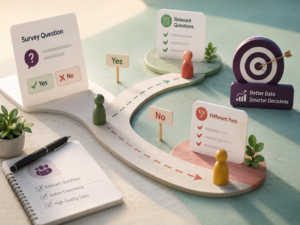
Aim for 5 to 10 questions whenever possible. Focus only on the information that will help improve the onboarding experience.
Ask Questions You Can Act On
Avoid asking questions that produce interesting but unusable data.
Every question should have a clear purpose. If the answer cannot influence future decisions or improvements, consider removing it.
Combine Quantitative and Qualitative Questions
Rating scales help identify trends and measure satisfaction.
Open-ended questions help explain why users feel a certain way.
Using both question types provides a more complete understanding of the onboarding experience.
Use Clear Language
Questions should be simple, direct, and easy to understand.
Avoid industry jargon, technical terminology, or complex wording that may confuse respondents.
Optimize for Mobile Devices
Many respondents complete surveys on smartphones. Ensure your onboarding survey is mobile-friendly and easy to complete on smaller screens.
Best Onboarding Survey Questions to Ask
The quality of your insights depends largely on the quality of your onboarding survey questions.
Here are some of the most effective questions organizations can use.
Overall Experience Questions
How would you rate your onboarding experience?
How satisfied are you with the onboarding process?
How likely are you to recommend our onboarding experience to others?
These questions provide a quick overview of overall satisfaction.
Clarity Questions
How clear were the onboarding instructions?
Did you understand the steps required to get started?
Were any parts of the onboarding process confusing?
These questions help identify communication gaps.
Ease-of-Use Questions
How easy was it to complete the onboarding process?
Did you encounter any difficulties during setup?
How quickly were you able to achieve your first success?
These questions reveal friction points that may impact retention.
Support Questions
Did you receive the help you needed during onboarding?
How satisfied were you with the support provided?
What additional resources would have been helpful?
These questions evaluate the effectiveness of support systems.
Open-Ended Questions
What did you like most about the onboarding experience?
What could we improve?
Was there anything missing from the onboarding process?
Open-ended responses often reveal insights that structured questions miss.
When Should You Send an Onboarding Survey?
Timing significantly affects response quality.
If you send a survey too early, users may not have enough experience to provide meaningful feedback.
If you wait too long, details may be forgotten.
For most situations, the best time to send an onboarding survey is shortly after users complete the onboarding process or achieve their first meaningful milestone.
Examples include:
- After account setup
- After completing initial training
- After attending onboarding sessions
- After first product use
- After completing the first project or task
The ideal timing depends on the complexity of the onboarding experience.
Common Mistakes to Avoid
Many onboarding surveys fail because organizations make avoidable mistakes.
One common issue is asking too many questions. Long surveys often result in lower completion rates and lower-quality responses.
Another mistake is focusing only on satisfaction scores without understanding the reasons behind them.
Some organizations also fail to act on collected feedback. Gathering data without implementing improvements can damage trust and reduce future participation.
Finally, using vague questions often produces vague answers. Specific questions generate more useful insights.
How Onboarding Surveys Improve Retention
One of the biggest benefits of onboarding surveys is their ability to improve retention.
When organizations identify and resolve onboarding issues early, users are more likely to remain engaged.
For example, if survey responses consistently indicate confusion during account setup, businesses can improve instructions, redesign workflows, or provide additional resources.
Small improvements made during onboarding often produce significant long-term benefits.
Better onboarding experiences lead to:
- Higher engagement
- Increased customer satisfaction
- Improved product adoption
- Lower churn rates
- Stronger customer loyalty
This makes onboarding surveys one of the most valuable feedback tools available.
Using a Free Online Survey Maker for Onboarding Surveys
Modern survey platforms make onboarding feedback collection easier than ever.
A free online survey maker allows organizations to create, distribute, and analyze onboarding surveys without requiring technical expertise.
Features often include:
- Drag-and-drop survey builders
- Mobile-responsive designs
- Custom branding
- Automated survey distribution
- Real-time reporting
- Survey templates
- Response analytics
These tools help businesses launch surveys quickly while maintaining a professional user experience.
For startups, small businesses, and growing organizations, free survey tools provide a cost-effective way to gather valuable onboarding feedback.
Why SurveyFlip Is Ideal for Onboarding Surveys
SurveyFlip helps organizations create professional onboarding surveys in minutes.
Whether you’re onboarding customers, employees, students, or software users, SurveyFlip provides flexible survey templates and customization options designed to maximize response rates.
With mobile-friendly surveys, real-time analytics, automation capabilities, and easy-to-use design tools, teams can collect actionable onboarding feedback and make improvements faster.
The result is a smoother onboarding experience and stronger long-term engagement.
The Future of Onboarding Surveys
As AI and automation continue to evolve, onboarding surveys are becoming more intelligent and personalized.
Organizations are beginning to use behavioral triggers, predictive analytics, and AI-powered insights to identify onboarding challenges before users even report them.
Future onboarding surveys will likely become more adaptive, delivering questions based on user behavior, milestones, and engagement patterns.
This will help organizations gather more relevant insights while reducing survey fatigue.
The businesses that succeed will be those that continuously listen, learn, and improve their onboarding experiences.
Final Thoughts
A great onboarding experience can significantly impact engagement, retention, and long-term success.
By asking the right onboarding survey questions, understanding how to design an onboarding survey, and using a reliable free online survey maker, organizations can gather valuable insights that drive continuous improvement.
The earlier you collect feedback, the sooner you can identify challenges, improve experiences, and build stronger relationships with customers, employees, and users.
In today’s competitive environment, onboarding surveys are not just feedback tools—they are strategic assets that help organizations create better first impressions and better long-term outcomes.
Frequently Asked Questions (FAQ)
1. What is an onboarding survey?
An onboarding survey is a questionnaire designed to collect feedback from new customers, employees, students, or users during their initial experience with a company, product, or service. The goal is to identify challenges, improve onboarding processes, and ensure people get the support they need from the start.
2. Why are onboarding survey questions important?
Onboarding survey questions help organizations understand how new users feel about their onboarding experience. By gathering feedback early, businesses can identify friction points, improve communication, increase engagement, and reduce customer or employee churn.
3. When should I send an onboarding survey?
The best time to send an onboarding survey depends on your onboarding process. In most cases, surveys should be sent shortly after:
- Account setup
- Product activation
- Employee orientation
- Training completion
- First successful use of a product or service
The goal is to collect feedback while the experience is still fresh.
4. How many questions should an onboarding survey have?
A good onboarding survey typically includes between 5 and 10 questions. Keeping surveys short improves completion rates while still providing enough data to identify improvement opportunities.
5. How do I design an onboarding survey?
If you’re learning how to design an onboarding survey, focus on:
- Clear and simple questions
- A mix of rating scales and open-ended questions
- Mobile-friendly design
- Relevant questions only
- Easy-to-understand language
- Actionable feedback goals
A well-designed survey should help you make measurable improvements.
6. What are the best onboarding survey questions to ask?
Some effective onboarding survey questions include:
- How would you rate your onboarding experience?
- How easy was it to get started?
- Were the instructions clear?
- Did you receive enough support?
- What could we improve?
- What was the most helpful part of onboarding?
These questions help uncover both strengths and weaknesses.
7. Why should businesses collect onboarding feedback?
Collecting onboarding feedback helps businesses improve first impressions, increase product adoption, reduce confusion, identify support gaps, and improve long-term retention. Early feedback often reveals issues before they negatively impact customer satisfaction.
8. Can onboarding surveys improve customer retention?
Yes. Studies consistently show that positive onboarding experiences increase customer retention. When businesses identify and resolve onboarding challenges early, users are more likely to remain engaged and continue using the product or service.
9. What is the difference between an onboarding survey and a customer satisfaction survey?
An onboarding survey focuses specifically on the early experience of new users. A customer satisfaction survey evaluates the overall experience after customers have used a product or service for a longer period.
10. Should onboarding surveys include open-ended questions?
Yes. Open-ended questions provide detailed insights that rating scales alone cannot capture. They allow respondents to explain challenges, share suggestions, and highlight experiences in their own words.
11. Can employee onboarding surveys use the same approach as customer onboarding surveys?
The overall structure is similar, but the questions should be tailored to the audience. Employee onboarding surveys typically focus on training, workplace culture, communication, and role clarity, while customer onboarding surveys focus on product setup, usability, and support.
12. What are common onboarding survey mistakes?
Common mistakes include:
- Asking too many questions
- Using confusing language
- Sending surveys at the wrong time
- Ignoring collected feedback
- Focusing only on satisfaction scores
- Not providing mobile-friendly survey experiences
Avoiding these mistakes can significantly improve response quality.
13. How can a free online survey maker help with onboarding surveys?
A free online survey maker helps organizations create professional onboarding surveys quickly and affordably. Many tools offer templates, mobile optimization, automation, response tracking, and analytics, making it easier to collect and act on feedback.
14. What metrics should I track in an onboarding survey?
Useful onboarding metrics include:
- Satisfaction score
- Ease-of-use score
- Time-to-value
- Support satisfaction
- Onboarding completion rate
- Net Promoter Score (NPS)
- Product adoption indicators
Tracking these metrics helps measure onboarding success over time.
15. How often should onboarding surveys be reviewed?
Survey responses should be reviewed regularly, ideally weekly or monthly depending on volume. Consistent analysis helps organizations identify trends, prioritize improvements, and continuously optimize onboarding experiences.
16. Can onboarding surveys be automated?
Yes. Most modern survey platforms allow businesses to automate onboarding surveys based on triggers such as account creation, first login, training completion, or milestone achievement. Automation ensures feedback is collected at the right time without manual effort.
17. How do onboarding surveys benefit SaaS businesses?
For SaaS companies, onboarding surveys help identify usability issues, improve feature adoption, reduce churn, increase activation rates, and enhance the overall customer experience. Early feedback is often one of the fastest ways to improve product growth.
18. What is the ultimate goal of an onboarding survey?
The ultimate goal is to understand the user’s first experience, identify opportunities for improvement, and create a smoother path to success. Effective onboarding surveys help organizations turn new users into long-term customers, employees, or advocates.