- 7 min read
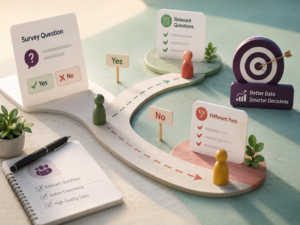

In 2025, designing a great survey is more than just writing a few questions—it’s a strategic process that affects everything from response rates to data quality. Whether you’re collecting customer feedback, employee opinions, or market research, applying modern survey design best practices ensures you get reliable, actionable results.
Let’s dive into the most up-to-date, research-backed best practices for survey design in 2025.
1. Keep Surveys Short, But Purposeful
✅ What It Means
A short survey increases the chance that people will finish it. However, “short” doesn’t mean sacrificing meaningful questions—it means asking only what’s essential.
📌 Why It Matters
- Long surveys lead to survey fatigue.
- Drop-off rates increase dramatically after 5 minutes.
- Incomplete surveys skew your data set.
💡 Real-World Example
An e-commerce brand reduced its customer feedback survey from 20 to 8 questions and saw a 40% increase in completions.
🛠️ How to Do It
- Limit to 5–10 core questions.
- Use logic branching to skip unnecessary sections.
- Remove any question that doesn’t directly help your goal.
2. Define Your Survey Objective Clearly
✅ What It Means
Every survey should have a single, clear goal—like improving customer experience, measuring employee satisfaction, or testing a new product concept.
📌 Why It Matters
- Clear objectives help you ask the right questions.
- Avoids survey bloat and irrelevant data collection.
- Makes your reporting more focused.
💡 Real-World Example
An HR team wanted to “improve workplace culture” but refined the objective to “measure remote work satisfaction”—leading to more specific, helpful questions.
🛠️ How to Do It
- Write down your survey’s single primary goal before creating questions.
- Use the goal as a filter: does each question help fulfill it?
3. Use a Logical Flow
✅ What It Means
Your survey should flow like a conversation—from general to specific, easy to harder, neutral to sensitive.
📌 Why It Matters
- Reduces confusion and frustration.
- Increases the chances of full completion.
- Helps respondents feel more comfortable answering honestly.
💡 Real-World Example
A nonprofit moved their demographics section to the end of their survey and saw a 25% increase in completion.
🛠️ How to Do It
- Start with warm-up questions.
- Group similar topics together.
- Use skip logic or branching to guide users efficiently.
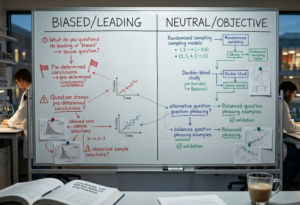
4. Write Clear and Neutral Questions
✅ What It Means
Your questions should be easy to understand and not lead the respondent toward a particular answer.
📌 Why It Matters
- Biased questions create unreliable data.
- Complex language causes misunderstanding.
- Misinterpretation leads to misleading results.
💡 Real-World Example
Instead of asking, “How much do you love our new feature?” use “How satisfied are you with the new feature?”
🛠️ How to Do It
- Avoid double-barreled questions (e.g., “How fast and reliable is our service?”).
- Replace adjectives like “great,” “amazing,” “terrible” with neutral terms.
- Read your questions aloud to check for clarity.
5. Use the Right Question Types
✅ What It Means
Different question formats gather different types of data. Choose wisely based on your goals.
📌 Why It Matters
- Matching format to question improves response accuracy.
- Variety helps keep users engaged.
- Poor question types lead to skewed or unusable results.
💡 Examples
- Multiple choice: Best for specific answers.
- Likert scale: Ideal for measuring agreement or satisfaction.
- Open-ended: Use for feedback, suggestions, or quotes.
🛠️ How to Do It
- Limit open-ended questions to 1–2 per survey.
- Use scales consistently (e.g., 1–5 or 1–7).
- Label your scale clearly: “1 = Not Satisfied, 5 = Very Satisfied.”
6. Avoid Survey Biases
✅ What It Means
Bias in surveys can happen due to leading questions, poor layout, or unintentional assumptions.
📌 Why It Matters
- Skewed data leads to bad business decisions.
- Reduces the credibility of your results.
🛠️ Common Biases to Avoid
- Acquiescence Bias: People tend to agree with statements. Use balanced questions.
- Order Bias: Mix up answer choices or randomize them.
- Social Desirability Bias: Ask sensitive questions anonymously or later in the survey.
7. Prioritize Mobile Optimization
✅ What It Means
Surveys should look and function perfectly on smartphones and tablets.
📌 Why It Matters in 2025
- Over 70% of users now complete surveys on mobile.
- A bad mobile layout leads to drop-offs.
💡 What to Include
- Large, tappable buttons.
- One question per screen layout.
- No long horizontal scrolls or drag-and-drop fields.
🛠️ How to Test
- Preview your survey on iOS and Android.
- Use survey tools with built-in responsive design (like SurveyFlip).
8. Show Progress and Set Expectations
✅ What It Means
Let respondents know how long the survey will take and show them where they are in the process.
📌 Why It Matters
- Transparency increases trust.
- Progress bars reduce dropout.
- Estimated time prepares users mentally.
🛠️ How to Do It
- Add a progress bar or percentage at the top.
- Mention expected completion time upfront.
- Use clear section headers (e.g., “About You,” “Your Experience”).
9. Ensure Privacy and Anonymity
✅ What It Means
Protect users’ data and make them feel safe sharing honest answers.
📌 Why It Matters
- Encourages truthful responses.
- Reduces fear of being judged.
- Ensures compliance with global data laws (GDPR, CCPA).
🛠️ How to Do It
- Add a short statement: “Your answers are 100% anonymous.”
- Avoid asking for names, emails, or IP unless necessary.
- Link to your privacy policy at the bottom.
10. Always Test and Review Before Launch
✅ What It Means
Before sending your survey to the world, test it with real users.
📌 Why It Matters
- Unclear wording, broken logic, or bad layout can ruin your data.
- Prevents avoidable embarrassment or loss of trust.
🛠️ How to Do It
- Test on different devices.
- Ask 2–3 colleagues or friends to take the survey and give feedback.
- Use preview modes offered by survey tools.
11. Provide a Thank You and Incentive (Optional)
✅ What It Means
End your survey with gratitude or a small reward (optional, but helpful).
📌 Why It Matters
- Encourages future participation.
- Leaves a positive impression.
- Increases overall response rate when done right.
🛠️ Ideas
- A thank-you message: “Thanks! Your feedback helps us grow.”
- A coupon, entry into a giveaway, or points if using a loyalty system.
12. Analyze, Learn, and Improve
✅ What It Means
Once responses are in, the real work begins: interpreting the data and improving future surveys.
📌 Why It Matters
- Poor analysis makes great design pointless.
- Trends, themes, and outliers help you make better decisions.
🛠️ What to Look For
- Drop-off points: Did most users quit after a certain question?
- Skipped questions: Were some unclear or too personal?
- Common patterns in open-ended feedback.
Conclusion: Survey Design Best Practices Help You Get Smarter in 2025
If you’re collecting feedback in 2025, your success depends on smart survey design. Applying these survey design best practices will help you:
- Increase your completion rates
- Improve the accuracy of your data
- Build trust with your audience
- Make better business, HR, and product decisions
Whether you’re creating a one-time form or launching a large feedback campaign, your survey is only as good as its design.