- 12 min read



Every sold-out stadium tells a story. While attendance numbers, ticket sales, and television ratings reveal how successful a football tournament appears on paper, they rarely explain what fans actually experienced inside the venue. Were security lines too long? Were concession stands efficient? Did spectators feel safe? Could they easily locate their seats?
These are the questions that determine whether a fan leaves with unforgettable memories or frustration.
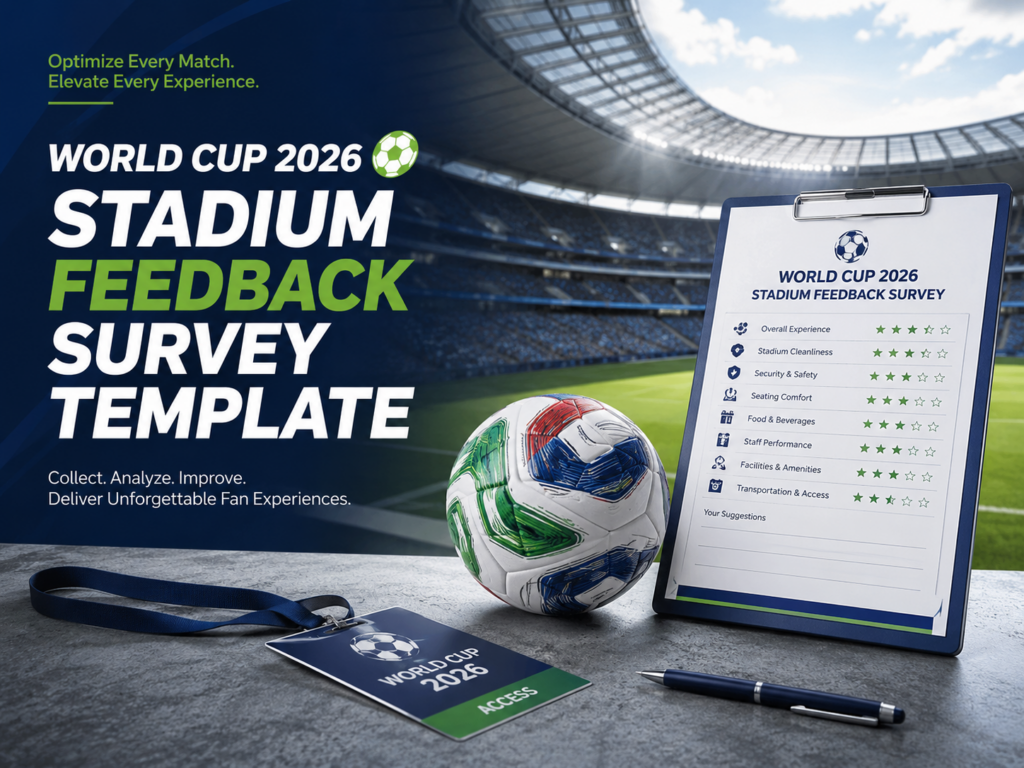
A world cup 2026 stadium feedback survey template provides organizers, stadium operators, venue managers, and event coordinators with a structured way to collect meaningful feedback from spectators. Instead of relying on assumptions, organizers can gather measurable data that highlights operational strengths and identifies areas requiring improvement.
With the FIFA World Cup 2026 expected to welcome millions of fans across the United States, Canada, and Mexico, collecting spectator feedback has become more important than ever. Stadium management teams that actively listen to fans can improve operations throughout the tournament while building long-term improvements for future sporting events.
This guide explains why stadium feedback matters, what questions every survey should include, how to analyze responses, and how organizations can use survey data to create better fan experiences.
What Is a World Cup 2026 Stadium Feedback Survey Template?
A world cup 2026 stadium feedback survey template is a ready-to-use questionnaire designed to evaluate the experience of spectators attending World Cup matches.
Rather than creating surveys from scratch after every event, organizers use standardized templates that consistently measure important aspects of the fan experience.
Typical survey topics include:
- Ticketing experience
- Entry procedures
- Security screening
- Stadium cleanliness
- Seating comfort
- Food and beverage services
- Staff professionalism
- Accessibility
- Transportation
- Fan safety
- Match-day atmosphere
- Overall satisfaction
Using one standardized template throughout the tournament allows organizers to compare feedback across different venues and identify recurring operational challenges.
Why Stadium Feedback Matters During World Cup 2026
Hosting one of the world’s largest sporting events requires thousands of operational decisions every day.
Even seemingly minor issues—such as confusing signage or insufficient restroom availability—can significantly affect spectator satisfaction.
Collecting feedback helps stadium management answer questions such as:
- Which entrance gates experienced the longest delays?
- Were concession prices considered reasonable?
- Did fans feel safe before and after matches?
- Was parking organized efficiently?
- Which services received the highest satisfaction scores?
- What improvements should be made before the next match?
Instead of relying solely on internal reports, management receives direct feedback from the people who experienced the event firsthand.
Benefits of Using a World Cup 2026 Stadium Feedback Survey Template
Using a structured survey provides advantages for both organizers and spectators.
Improve Fan Satisfaction
Happy fans are more likely to recommend future events, return to the venue, and engage with sponsors and official merchandise.
Survey responses reveal what fans appreciated and what diminished their overall experience.
Make Better Operational Decisions
Data replaces assumptions.
If thousands of fans report lengthy concession wait times, management has clear evidence to increase staffing or add more food vendors.
Identify Problems Early
A tournament spans multiple matches.
Collecting feedback after every game allows organizers to solve problems before the next event instead of waiting until the tournament ends.
Support Sponsor Relationships
Sponsors want positive fan experiences.
Survey data demonstrates attendee satisfaction with sponsored activities, branded fan zones, promotional events, and digital experiences.
Improve Future Sporting Events
Insights gathered during the World Cup remain valuable for future MLS matches, international friendlies, concerts, and other large-scale sporting events.
Who Should Use This Survey?
A world cup 2026 stadium feedback survey template is valuable for many organizations involved in major sporting events.
These include:
- Stadium management companies
- Event organizers
- Sports governing bodies
- Venue operators
- Security teams
- Transportation planners
- Hospitality departments
- Fan engagement teams
- Operations managers
- Tourism authorities
- Marketing departments
- City event coordinators
Each department benefits from different sections of the survey.
What Should a Stadium Feedback Survey Measure?
A high-quality survey evaluates the entire fan journey from arrival to departure.
Ticket Purchasing Experience
Understanding whether fans encountered issues while buying tickets helps improve future purchasing systems.
Questions may include:
- Was ticket purchasing easy?
- Was pricing clear?
- Were digital tickets easy to access?
Stadium Entry
Long security lines often become one of the biggest complaints during major events.
Survey questions should evaluate:
- Waiting time
- Security professionalism
- Bag screening
- Ticket scanning
- Entrance organization
Wayfinding and Navigation
Large stadiums can be confusing for first-time visitors.
Gather feedback about:
- Directional signage
- Parking instructions
- Restroom locations
- Seat finding
- Fan zones
Seating Experience
Comfort directly influences spectator satisfaction.
Measure:
- Seat comfort
- Legroom
- Viewing angles
- Accessibility
- Crowd management
Food and Beverage Services
Food quality often becomes one of the highest-rated or lowest-rated areas.
Survey:
- Food quality
- Menu variety
- Wait times
- Pricing
- Staff friendliness
- Availability
Cleanliness
Fans quickly notice cleanliness throughout the venue.
Include questions covering:
- Restrooms
- Seating areas
- Hallways
- Waste disposal
- Food courts
Staff Performance
Evaluate interactions with:
- Volunteers
- Security
- Ushers
- Guest services
- Medical staff
Professional, friendly employees significantly improve overall satisfaction.
Safety and Security
Feeling safe remains one of the highest priorities for any sporting event.
Measure perceptions regarding:
- Crowd control
- Emergency preparedness
- Security visibility
- Lighting
- Police presence
Transportation
The fan experience begins before entering the stadium.
Ask about:
- Parking
- Public transportation
- Ride-share access
- Shuttle buses
- Traffic management
Overall Experience
Conclude with overall satisfaction and open-ended feedback.
Questions like:
“What is the one improvement you would most like to see?”
often generate valuable operational insights.
Sample World Cup 2026 Stadium Feedback Survey Template
Below is an example of a practical survey suitable for post-match distribution.
1. Overall, how satisfied were you with your stadium experience?
- Very Satisfied
- Satisfied
- Neutral
- Dissatisfied
- Very Dissatisfied
2. How would you rate stadium cleanliness?
- Excellent
- Good
- Average
- Poor
- Very Poor
3. How satisfied were you with security and entry procedures?
- Very Satisfied
- Satisfied
- Neutral
- Dissatisfied
- Very Dissatisfied
4. Was it easy to find your seat and stadium facilities?
- Very Easy
- Easy
- Neutral
- Difficult
- Very Difficult
5. How would you rate food and beverage services?
- Excellent
- Good
- Average
- Poor
- Very Poor
6. How satisfied were you with your seating comfort?
- Very Satisfied
- Satisfied
- Neutral
- Dissatisfied
- Very Dissatisfied
7. How would you rate stadium staff?
- Excellent
- Good
- Average
- Poor
- Very Poor
8. Did you feel safe during the event?
- Completely
- Mostly
- Somewhat
- Not Really
- Not at All
9. How likely are you to attend another event at this stadium?
- Extremely Likely
- Likely
- Neutral
- Unlikely
- Very Unlikely
10. What improvements would you recommend?
(Open-ended response)
Best Practices for Collecting Stadium Feedback
Simply creating a survey is not enough.
To maximize participation:
- Send surveys within 24 hours of the match.
- Keep completion time under five minutes.
- Make surveys mobile-friendly.
- Offer QR codes throughout the stadium.
- Send reminder emails to ticket holders.
- Ensure anonymous participation.
- Thank respondents after completion.
Higher response rates produce more representative data.
Turning Survey Data Into Action
Collecting responses is only the first step.
The real value comes from analyzing patterns.
For example:
70% of fans report long concession waits, management can increase food vendors.
If accessibility ratings decline at one venue, organizers can investigate transportation routes or seating arrangements.
If cleanliness scores consistently improve, maintenance procedures are working effectively.
Survey dashboards make it easy to visualize trends across multiple matches and stadiums.
Why Event Management Templates Save Time
Creating surveys from scratch before every event wastes valuable planning time.
Professional event management templates provide standardized questions, consistent reporting, and comparable results across venues.
They also reduce survey design errors while making it easier for multiple departments to collaborate using the same data collection framework.
Organizations managing recurring events often build a library of reusable templates for operations, security, volunteer management, customer satisfaction, and post-event evaluations.
How Sports Event Feedback Surveys Improve Future Events
A well-designed sports event feedback survey goes beyond measuring satisfaction. It becomes a continuous improvement tool.
By analyzing responses after each match, organizers can:
- Improve fan services
- Reduce operational bottlenecks
- Enhance stadium accessibility
- Strengthen emergency preparedness
- Optimize staffing levels
- Improve concession operations
- Increase spectator loyalty
The insights collected today directly influence the quality of tomorrow’s events.
Using World Cup 2026 Fan Survey Templates Across Multiple Venues
The World Cup will be hosted in multiple cities, making consistency essential.
Standardized World Cup 2026 Fan Survey Templates allow organizers to compare fan experiences across different stadiums while maintaining the same evaluation criteria.
For example, management can compare average satisfaction scores for:
- Stadium cleanliness
- Security screening
- Food service
- Seating comfort
- Transportation
- Staff helpfulness
- Overall experience
These comparisons help identify best-performing venues and share successful operational practices across host cities.
Why Every Stadium Needs a Sports Event Evaluation Survey Form Template
A Sports Event Evaluation Survey Form Template provides an organized framework for measuring event performance from the fan’s perspective.
Instead of collecting random comments from social media, organizers receive structured, measurable feedback that supports informed decision-making.
Whether the goal is improving concession operations, reducing wait times, increasing accessibility, or enhancing guest services, standardized evaluation forms provide reliable data that can be tracked over time.
For organizations managing large sporting events, these templates become an essential part of operational planning and continuous improvement.
Conclusion
Hosting a successful World Cup match requires much more than delivering exciting football. Every interaction—from ticket purchase to stadium exit—shapes how fans remember the event.
A thoughtfully designed world cup 2026 stadium feedback survey template enables stadium operators and event organizers to capture real spectator insights, identify operational improvements, and make informed decisions that enhance every match-day experience.
Combined with reusable event management templates, a comprehensive sports event feedback survey, standardized World Cup 2026 Fan Survey Templates, and a practical Sports Event Evaluation Survey Form Template, organizers can transform fan feedback into actionable improvements that benefit both current tournaments and future sporting events.
Listening to spectators is one of the most effective ways to create safer, more efficient, and more memorable stadium experiences. As millions of fans gather for World Cup 2026, collecting and acting on their feedback will play a vital role in delivering an exceptional event from kickoff to the final whistle.
Frequently Asked Questions (FAQs)
What is a World Cup 2026 stadium feedback survey template?
A world cup 2026 stadium feedback survey template is a structured questionnaire designed to collect feedback from spectators after attending a FIFA World Cup 2026 match. It helps stadium operators and event organizers evaluate areas such as security, seating, cleanliness, food services, accessibility, staff performance, and the overall fan experience.
Why is a stadium feedback survey important for major sporting events?
A stadium feedback survey provides valuable insights directly from attendees. Instead of relying on assumptions, organizers can identify operational issues, measure fan satisfaction, improve services, enhance safety, and make data-driven decisions for future matches and events.
Who should use a World Cup 2026 stadium feedback survey template?
This survey template is useful for stadium managers, event organizers, sports venue operators, tournament coordinators, hospitality teams, security personnel, marketing departments, tourism organizations, and local governments involved in hosting large-scale sporting events.
What questions should be included in a sports event feedback survey?
A comprehensive sports event feedback survey should cover ticket purchasing, entry procedures, security screening, stadium cleanliness, seating comfort, accessibility, food and beverage services, staff professionalism, transportation, safety, overall satisfaction, and suggestions for improvement.
How many questions should a stadium feedback survey include?
Most effective surveys contain between 8 and 15 questions. This length is enough to gather meaningful insights while keeping completion time under five minutes, which helps improve response rates.
When should organizers send the survey to fans?
The best practice is to distribute the survey within 24 hours after the match. Sending it while the experience is still fresh increases response rates and improves the accuracy of feedback.
How can organizers increase survey response rates?
Response rates improve when surveys are mobile-friendly, easy to complete, and shared through multiple channels such as email, SMS, QR codes displayed inside the stadium, mobile apps, and social media. Keeping the survey short and explaining how feedback will be used also encourages participation.
What are event management templates, and why are they useful?
Event management templates are reusable documents that standardize planning, operations, reporting, and data collection across multiple events. They save time, improve consistency, reduce errors, and make it easier to compare results between different venues or tournaments.
What is the difference between a fan survey and a sports event evaluation survey form template?
A fan survey focuses specifically on the spectator’s experience, including comfort, entertainment, and satisfaction. A Sports Event Evaluation Survey Form Template typically evaluates the overall event from an operational perspective, covering logistics, staffing, security, venue management, and event performance in addition to fan feedback.
Can World Cup 2026 Fan Survey Templates be customized?
Yes. World Cup 2026 Fan Survey Templates can be customized to match different stadiums, host cities, event types, or organizational goals. Organizers can add questions related to accessibility, transportation, sustainability initiatives, VIP experiences, merchandise, digital services, or sponsor activations while maintaining a consistent survey structure.
What rating scale works best for stadium feedback surveys?
A five-point Likert scale is the most commonly used option because it is easy for respondents to understand and provides meaningful data for analysis. Typical response options include Very Satisfied, Satisfied, Neutral, Dissatisfied, and Very Dissatisfied.
How should organizers use the survey results?
Survey results should be analyzed to identify trends, recurring issues, and areas of high performance. Organizers can use dashboards and reports to prioritize improvements, allocate resources more effectively, improve fan services, enhance stadium operations, and monitor changes across multiple matches or venues.