- 14 min read

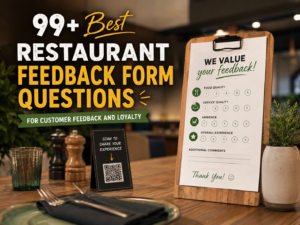
Every restaurant owner wants the same thing: happy guests who come back again and again. Whether you run a neighborhood café, a fast-casual chain, a fine dining restaurant, a food truck, or a nationwide franchise, understanding what customers truly think about their dining experience is one of the fastest ways to improve service, strengthen loyalty, and increase revenue.
The challenge isn’t convincing customers to share feedback—it’s asking the right questions.
Generic surveys often produce generic answers. But carefully written restaurant feedback form questions help uncover valuable insights about food quality, customer service, cleanliness, pricing, atmosphere, and overall satisfaction.
In this guide, you’ll find more than 99 proven restaurant survey questions organized by category, along with best practices for creating a high-converting customer satisfaction survey that encourages honest responses and helps your restaurant grow.
Why Restaurant Customer Feedback Matters
The restaurant industry is one of the most competitive businesses in the United States.
Customers have countless dining options, online reviews influence purchasing decisions, and one poor experience can quickly spread across social media.
Collecting feedback helps restaurants:
- Improve guest satisfaction
- Increase repeat visits
- Reduce negative online reviews
- Identify operational issues
- Train employees more effectively
- Improve menu offerings
- Enhance food quality
- Build customer loyalty
- Increase referrals
- Make data-driven business decisions
Rather than guessing what guests want, feedback allows restaurants to make improvements based on real customer experiences.
What Is a Restaurant Feedback Form?
A restaurant feedback form is a survey designed to gather opinions about the guest’s dining experience.
It can be distributed:
- After dining
- Through email
- Via SMS
- Using QR codes
- On receipts
- Through loyalty programs
- Inside restaurant apps
- On websites
A good feedback form collects both ratings and written comments.
The combination of quantitative and qualitative feedback provides the clearest picture of customer satisfaction.
Best Practices Before Writing Restaurant Survey Questions
Before jumping into questions, keep these principles in mind.
- Ask only questions that support business decisions.
- Keep surveys short enough to encourage completion.
- Use simple language.
- Avoid leading questions.
- Include rating scales where appropriate.
- Offer optional comment boxes.
- Optimize surveys for mobile devices.
- Thank guests for participating.
These practices improve response rates while increasing the quality of feedback.
Restaurant Feedback Form Questions About Overall Experience
These opening questions provide a high-level understanding of the guest experience.
- How satisfied were you with your overall visit?
- How would you rate your dining experience?
- Did your visit meet your expectations?
- How likely are you to return?
- Would you recommend our restaurant to others?
- How would you describe today’s experience?
- What was the highlight of your visit?
- What disappointed you most?
- Did we provide a memorable dining experience?
- What could we improve?
Food Quality Survey Questions
Food remains the biggest reason customers return.
These food quality survey questions help restaurants evaluate every aspect of the meal.
- How would you rate the quality of your food?
- Was your meal served fresh?
- Was the food served at the correct temperature?
- Did your meal match the menu description?
- How satisfied were you with portion sizes?
- Was your order prepared accurately?
- Did your meal taste as expected?
- How visually appealing was your food?
- Was the menu easy to understand?
- Which menu item was your favorite?
- Which menu item needs improvement?
- Was there enough variety on the menu?
- Did you find healthy options?
- Was the presentation attractive?
- Would you order the same meal again?
Customer Service Survey Questions for Restaurants
Excellent service creates loyal customers.
These customer service survey questions for restaurants evaluate staff performance.
- How friendly was our staff?
- Were you greeted promptly?
- Was your server attentive?
- Did our staff answer your questions clearly?
- Were your requests handled professionally?
- Did staff make you feel welcome?
- Was your order taken accurately?
- Did staff check on your table appropriately?
- Were employees knowledgeable about the menu?
- Did staff resolve any issues quickly?
- How satisfied were you with your server?
- Did staff thank you before you left?
- Did you experience any service delays?
- Would you compliment our staff?
- What could our team do better?
Restaurant Cleanliness Questions
Cleanliness directly affects customer trust.
- How clean was the dining area?
- Were tables cleaned promptly?
- How clean were the restrooms?
- Did the restaurant appear well maintained?
- Were utensils and dishes clean?
- Did the environment feel hygienic?
- Were condiment stations clean?
- Did you notice anything needing attention?
- Was outdoor seating clean?
- How would you rate overall cleanliness?
Restaurant Atmosphere Questions
Ambiance influences the overall experience.
- How comfortable was the seating?
- Was the restaurant too noisy?
- Was the lighting appropriate?
- Did you enjoy the décor?
- Was the music enjoyable?
- Did the atmosphere match the restaurant style?
- Was the dining room crowded?
- Did you feel relaxed during your visit?
- How would you rate the restaurant ambiance?
- What would improve the atmosphere?
Speed of Service Questions
Fast, efficient service often determines repeat visits.
- How long did you wait to be seated?
- Was your food served promptly?
- Was ordering quick and easy?
- Were drinks served quickly?
- Was checkout efficient?
- Did service meet your expectations?
- Was the wait reasonable?
- Did any delays affect your experience?
- Would faster service improve your visit?
- How satisfied were you with service speed?
Pricing Questions
Understanding customer perceptions of value helps optimize pricing strategies.
- Did the meal provide good value?
- Were prices reasonable?
- Were menu prices clear?
- Did portion sizes justify the cost?
- Would you pay the same price again?
- Was the quality worth the price?
- Were there unexpected charges?
- Would promotions encourage another visit?
- Which menu items offered the best value?
- Which items seemed overpriced?
Online Ordering and Delivery Questions
Modern restaurants increasingly rely on digital ordering.
- Was online ordering easy?
- Was your order accurate?
- Did delivery arrive on time?
- Was the packaging satisfactory?
- Did your food arrive fresh?
- Was the ordering website easy to navigate?
- Were delivery updates helpful?
- Would you order online again?
- Was pickup convenient?
- How could online ordering improve?
Loyalty and Recommendation Questions
These questions measure long-term customer relationships.
- How likely are you to visit again?
- Would you recommend us to family?
- Would you recommend us to friends?
- What keeps you coming back?
- What might stop you from returning?
- Have you visited before?
- How often do you dine with us?
- Would you join our rewards program?
- Would exclusive offers increase your visits?
- What would make you choose us over competitors?
Open-Ended Guest Feedback Form Questions
A great guest feedback form always includes open-ended questions.
These often produce the most valuable insights.
- What did you enjoy most?
- What should we improve?
- Was there anything unexpected?
- Which employee deserves recognition?
- What menu items would you like us to add?
- What almost prevented you from visiting?
- How can we create a better dining experience?
- Is there anything else you’d like us to know?
Why Open-Ended Questions Matter
While ratings help identify trends, written responses explain why customers feel the way they do.
For example, a customer might rate food quality as 3 out of 5.
Without additional comments, the restaurant doesn’t know whether the issue involved:
- Taste
- Portion size
- Temperature
- Freshness
- Presentation
- Menu variety
Open-ended questions provide that missing context.
Choosing the Right Survey Length
Long surveys reduce completion rates.
For most restaurants, an ideal customer satisfaction survey contains:
- 8–15 rating questions
- 2–4 open-ended questions
- Completion time under five minutes
Customers are far more likely to finish shorter surveys, especially when accessed through QR codes or mobile devices.
When to Send Restaurant Surveys
Timing significantly affects response quality.
Restaurants often achieve the best results by sending surveys:
- Immediately after payment
- Within one hour after dining
- Within 24 hours via email
- After online delivery
- Following loyalty program purchases
Fresh experiences generate more accurate feedback.
Using QR Codes to Collect Feedback
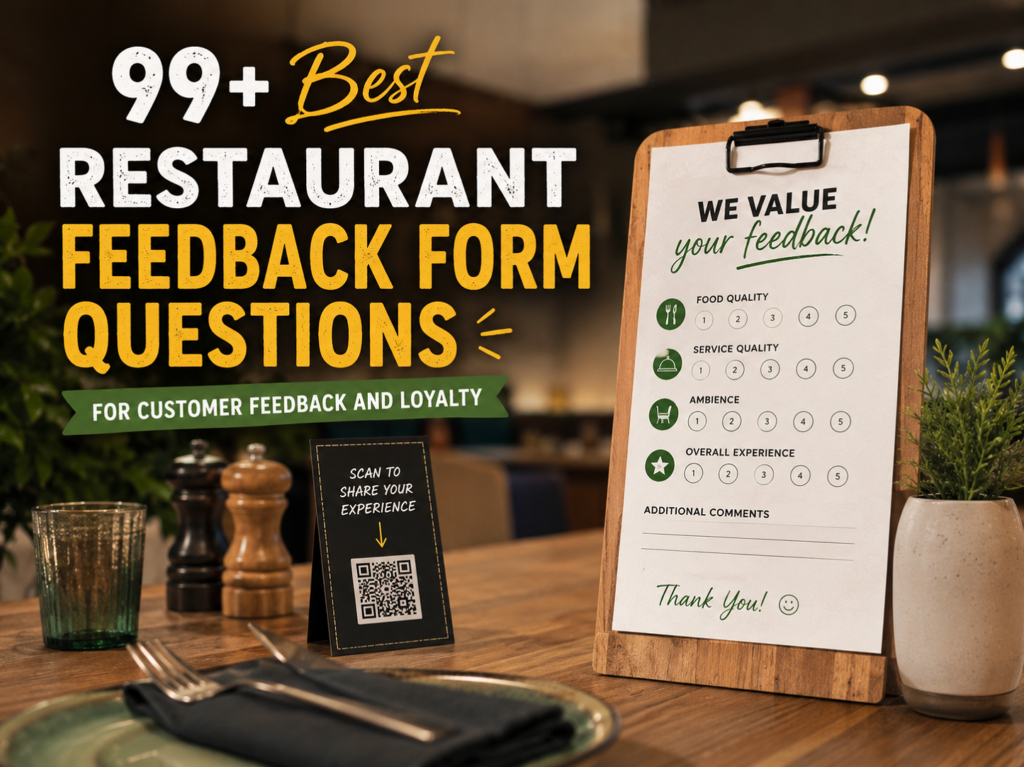
QR codes have become one of the easiest ways to collect customer feedback.
Restaurants can place QR codes:
- On receipts
- On table tents
- On menus
- Near exits
- On takeout packaging
- On delivery inserts
Guests simply scan the code and complete the survey on their smartphones.
This reduces friction and increases participation.
Using Survey Data to Improve Restaurant Performance
Collecting feedback only creates value when restaurants act on it.
Survey insights help restaurants:
- Improve recipes.
- Train employees.
- Adjust pricing.
- Improve cleanliness.
- Reduce wait times.
- Optimize menus.
- Recognize top-performing staff.
- Improve online ordering.
- Increase customer loyalty.
- Reduce negative reviews.
Every completed survey represents an opportunity to make the next guest experience even better.
How SurveyFlip Helps Restaurants Collect Better Feedback
SurveyFlip makes it easy for restaurants to create beautiful, mobile-friendly feedback surveys without requiring technical expertise.
Restaurants can build customized restaurant survey questions, use QR code surveys, automate follow-up emails, monitor responses in real time, analyze customer satisfaction trends, and identify opportunities for improvement through powerful reporting dashboards.
Whether you’re collecting food quality survey questions, evaluating customer service survey questions for restaurants, or creating a complete guest feedback form, SurveyFlip provides the flexibility needed to gather meaningful customer insights while improving response rates.
Final Thoughts
The best restaurants never stop listening.
Customer expectations evolve constantly, and the only reliable way to stay ahead is by collecting consistent, actionable feedback.
Well-designed restaurant feedback form questions help restaurants understand what guests love, what needs improvement, and where new opportunities exist.
By combining thoughtful restaurant survey questions, strategic timing, mobile-friendly design, and ongoing analysis, restaurants can improve customer satisfaction, strengthen loyalty, increase repeat business, and build experiences that keep guests coming back.
The best meals create happy customers.
The best surveys create better restaurants.
Frequently Asked Questions (FAQ)
1. What are restaurant feedback form questions?
Restaurant feedback form questions are survey questions that help restaurants collect customer opinions about food quality, service, cleanliness, pricing, atmosphere, and the overall dining experience. The goal is to identify strengths, improve weak areas, and increase customer satisfaction.
2. Why should restaurants use customer feedback surveys?
A customer satisfaction survey helps restaurants understand what guests enjoy and where improvements are needed.
Benefits include:
- Improving food quality
- Enhancing customer service
- Increasing repeat visits
- Building customer loyalty
- Reducing negative online reviews
- Making data-driven business decisions
Customer feedback helps restaurants improve every aspect of the dining experience.
3. What should a restaurant feedback form include?
A complete restaurant feedback form should include questions about:
- Overall satisfaction
- Food quality
- Staff friendliness
- Speed of service
- Cleanliness
- Restaurant atmosphere
- Pricing
- Online ordering experience
- Likelihood to recommend
- Open-ended suggestions
This combination provides both measurable data and detailed customer insights.
4. How many restaurant survey questions should I ask?
Most restaurants achieve the best response rates with 10–15 questions.
Long surveys often reduce completion rates.
Focus on asking only questions that help improve your restaurant or customer experience.
5. What are the best food quality survey questions?
Some effective food quality survey questions include:
- How would you rate the quality of your meal?
- Was your food served fresh?
- Was the food served at the correct temperature?
- Were portion sizes appropriate?
- Did your meal match the menu description?
- Would you order this meal again?
These questions help identify specific areas for menu improvement.
6. What are good customer service survey questions for restaurants?
Useful customer service survey questions for restaurants include:
- Was our staff friendly and welcoming?
- Did your server answer your questions?
- Was your order taken accurately?
- Was service prompt?
- Did our team resolve any issues professionally?
- Would you compliment our staff?
These questions evaluate service quality and employee performance.
7. What is a guest feedback form?
A guest feedback form is a survey that allows restaurant customers to share opinions about their dining experience.
It often includes rating questions, multiple-choice questions, and open-ended comments to gather valuable customer insights.
8. When should restaurants ask customers for feedback?
The ideal time is immediately after the dining experience.
Many restaurants send surveys:
- On receipts with QR codes
- Via email within 24 hours
- Through SMS
- Inside restaurant apps
- After online delivery orders
Fresh experiences usually produce more accurate feedback.
9. How can restaurants increase survey response rates?
To improve survey completion:
- Keep surveys under five minutes.
- Optimize for mobile devices.
- Use QR codes.
- Offer small incentives when appropriate.
- Ask clear, simple questions.
- Thank customers for participating.
- Avoid lengthy questionnaires.
Making surveys easy encourages more customers to respond.
10. Should restaurants use open-ended questions?
Yes.
Open-ended questions help explain customer ratings.
For example:
- What did you enjoy most?
- What could we improve?
- Which menu item impressed you?
- Is there anything you’d like us to change?
These responses often provide the most actionable insights.
11. How do QR code surveys help restaurants?
QR code surveys make feedback collection quick and convenient.
Restaurants can place QR codes:
- On receipts
- On tables
- On menus
- On takeout packaging
- Near exits
Customers simply scan the code and complete the survey on their smartphone.
12. How often should restaurants collect customer feedback?
Customer feedback should be collected continuously.
Restaurants can survey guests after:
- Every dine-in visit
- Every online order
- Every delivery
- Catering events
- Loyalty program purchases
Ongoing feedback helps identify trends and monitor improvements over time.
13. What mistakes should restaurants avoid when creating surveys?
Common mistakes include:
- Asking too many questions
- Using confusing language
- Making every question mandatory
- Asking irrelevant questions
- Ignoring customer comments
- Failing to act on survey results
Simple, focused surveys generally perform much better.
14. Can customer feedback improve restaurant revenue?
Absolutely.
Customer feedback helps restaurants:
- Improve guest satisfaction
- Increase repeat customers
- Reduce customer complaints
- Improve online reviews
- Optimize menus
- Strengthen customer loyalty
Happy customers are more likely to return and recommend the restaurant to others.
15. How do restaurant survey questions improve customer loyalty?
Thoughtful restaurant survey questions show customers that their opinions matter.
When restaurants listen to feedback and make visible improvements, guests feel valued and are more likely to become repeat customers.
16. Should restaurants offer incentives for completing surveys?
Small incentives can improve participation.
Examples include:
- Discount coupons
- Loyalty points
- Free desserts
- Entry into prize drawings
- Future dining discounts
The reward should encourage participation without influencing honest responses.
17. What metrics should restaurants track from customer surveys?
Restaurants commonly monitor:
- Overall satisfaction score
- Food quality ratings
- Service ratings
- Cleanliness ratings
- Net Promoter Score (NPS)
- Customer Effort Score (CES)
- Survey completion rate
- Repeat visit intention
These metrics help measure customer experience over time.
18. How can SurveyFlip help restaurants collect customer feedback?
SurveyFlip enables restaurants to create professional, mobile-friendly feedback surveys with customizable templates, QR code surveys, conditional logic, real-time analytics, and automated reporting. Whether you’re collecting restaurant feedback form questions, running a customer satisfaction survey, or building a guest feedback form, SurveyFlip helps you gather actionable insights while improving response rates.
19. What is the difference between a restaurant feedback form and a customer satisfaction survey?
A restaurant feedback form usually collects detailed feedback about multiple aspects of the dining experience, including food, service, cleanliness, and atmosphere.
A customer satisfaction survey primarily measures overall satisfaction and loyalty.
Many restaurants combine both into a single survey for the most comprehensive insights.
20. What is the biggest takeaway about restaurant feedback form questions?
The best restaurant feedback form questions don’t simply collect ratings—they uncover opportunities for improvement. By asking relevant questions about food quality, customer service, cleanliness, value, and overall experience, restaurants can make smarter decisions, improve guest satisfaction, strengthen customer loyalty, and create memorable dining experiences that keep customers coming back.