- 9 min read



Customer expectations in 2026 are higher than they have ever been before. Consumers now expect fast support, personalized experiences, seamless digital interactions, and brands that truly listen to their feedback. Businesses that fail to understand customer expectations often struggle with declining loyalty, lower retention, and growing competition.
This is why the Customer Satisfaction Survey has become one of the most valuable business tools in the modern digital economy. Companies are no longer using surveys only to measure happiness levels. Instead, businesses now rely on customer feedback systems to improve products, optimize services, increase customer retention, and make smarter business decisions in real time.
In today’s highly competitive environment, customer satisfaction directly impacts growth. A satisfied customer is more likely to return, recommend a brand to others, and build long-term trust with a company. On the other hand, a poor customer experience can quickly lead to negative reviews, social media complaints, and lost revenue.
The businesses succeeding in 2026 are the ones actively listening to customers and acting on feedback faster than competitors.
What Is a Customer Satisfaction Survey?
A Customer Satisfaction Survey is a structured feedback system businesses use to understand how customers feel about a product, service, support interaction, or overall brand experience.
The purpose of these surveys is not simply to collect ratings. Modern customer satisfaction surveys help businesses identify problems, understand customer expectations, and discover opportunities for improvement.
For example, a business may use surveys to understand:
- Why customers stop using a product
- Which features customers value most
- Whether support quality meets expectations
- How easy the buying experience feels
- What frustrations customers experience during onboarding
In 2026, surveys are becoming far more advanced than traditional forms with simple rating questions. AI-powered platforms now allow businesses to personalize surveys, analyze customer sentiment instantly, and generate actionable insights automatically.
This evolution is transforming surveys into intelligent customer experience systems.
Why Customer Satisfaction Matters More in 2026
The digital economy has made competition more intense across nearly every industry. Customers can switch between brands quickly, compare reviews instantly, and publicly share experiences online within seconds.
As a result, customer experience has become one of the biggest competitive advantages businesses can have.
A strong Customer Satisfaction Survey 2026 strategy helps businesses understand exactly what customers want and where improvements are needed. This allows companies to fix problems before customers leave for competitors.
Customer satisfaction impacts nearly every area of business performance, including:
- Customer retention
- Brand loyalty
- Online reputation
- Repeat purchases
- Customer lifetime value
- Referral growth
Businesses that consistently improve customer experiences often grow faster than competitors that ignore customer feedback.
The Evolution from Traditional Surveys to AI-Powered Feedback Systems
Traditional survey systems were often slow and limited. Businesses would create static questionnaires, send them occasionally through email, and manually analyze responses later using spreadsheets or reports.
This approach created several problems:
- Delayed insights
- Generic survey experiences
- Low response rates
- Manual analysis workload
- Difficulty identifying trends quickly
Modern survey technology is solving many of these issues through artificial intelligence and automation.
Today’s Customer Satisfaction Survey platforms can automatically generate surveys, personalize questions based on user behavior, and analyze thousands of responses in real time.
AI-powered systems can also identify customer emotions, detect frustration patterns, and highlight urgent issues immediately. This allows businesses to respond much faster and improve customer experiences proactively.
Instead of waiting weeks for reports, companies can now make customer-focused decisions instantly.
Real-Time Feedback Is Transforming Customer Experience
One of the biggest changes in the Customer Satisfaction Survey 2026 landscape is the shift toward real-time feedback collection.
Businesses no longer wait for quarterly surveys or annual customer reports. Modern companies now collect feedback continuously throughout the customer journey.
For example, surveys may appear:
- Immediately after a purchase
- After a customer support interaction
- During software onboarding
- Following feature usage
- After delivery completion
Collecting feedback at the moment of interaction creates more accurate and relevant insights because customer experiences are still fresh in their minds.
Real-time feedback also helps businesses resolve issues quickly before dissatisfaction escalates into negative reviews or customer churn.
This faster response cycle is becoming essential in modern customer experience management.
Different Types of Customer Satisfaction Surveys
Businesses use several types of customer satisfaction surveys depending on their goals and industry.
Customer Satisfaction Score (CSAT)
CSAT surveys measure how satisfied customers are with a specific interaction or experience. These surveys usually ask customers to rate satisfaction levels using a scale.
For example:
“How satisfied were you with your recent experience?”
CSAT surveys are commonly used after customer support conversations, purchases, or service interactions because they provide quick and simple feedback.
Net Promoter Score (NPS)
NPS surveys focus on customer loyalty and referral potential. Customers are asked how likely they are to recommend a business to others.
This type of survey helps businesses measure long-term brand loyalty and overall customer sentiment.
NPS has become one of the most widely used customer satisfaction metrics worldwide because loyal customers often drive sustainable business growth.
Customer Effort Score (CES)
CES surveys measure how easy it was for customers to complete a task or resolve a problem.
Businesses use CES surveys to identify friction points in the customer journey. Reducing customer effort often leads to better experiences and higher retention rates.
How AI Is Improving Customer Satisfaction Surveys
Artificial intelligence is rapidly transforming the survey industry.
Modern AI-powered survey platforms can:
- Create surveys automatically
- Personalize question flows
- Optimize survey timing
- Analyze customer sentiment instantly
- Detect patterns and trends
- Generate automated recommendations
This significantly reduces manual work while improving the quality of insights businesses receive.
AI also helps businesses avoid survey fatigue by shortening surveys and removing unnecessary questions.
Instead of asking every customer the same questions, intelligent survey systems adapt dynamically based on customer behavior and responses.
This creates more engaging experiences and improves response quality.
Why Personalization Improves Survey Performance
Modern consumers expect personalized digital experiences everywhere, including surveys.
Generic surveys often feel repetitive and irrelevant, which reduces engagement and completion rates.
Personalized Customer Satisfaction Survey systems improve the user experience by asking questions relevant to each customer’s journey.
For example:
- New users may receive onboarding-related questions
- Returning customers may receive loyalty-focused surveys
- SaaS users may receive feature-specific feedback requests
This personalized approach increases participation while also generating more accurate and useful insights.
Common Mistakes Businesses Make with Customer Satisfaction Surveys
Despite the importance of customer feedback, many businesses still misuse surveys.
One common mistake is asking too many questions. Long surveys often frustrate users and reduce completion rates.
Another mistake is failing to act on customer feedback. When businesses collect feedback but ignore customer concerns, trust decreases significantly.
Some companies also rely too heavily on generic templates that fail to address specific customer experiences.
The most effective surveys are short, relevant, personalized, and connected directly to business improvements.
The Future of Customer Satisfaction Surveys
The future of the Customer Satisfaction Survey 2026 strategy is becoming more intelligent, predictive, and conversational.
Emerging technologies are making surveys more natural and less intrusive.
Future trends include:
- AI-powered conversational surveys
- Voice-based feedback systems
- Predictive customer satisfaction analysis
- Real-time sentiment tracking
- Hyper-personalized survey experiences
Businesses are moving toward continuous customer listening models where feedback is collected naturally throughout the customer journey.
This shift will help organizations understand customer needs faster and improve experiences proactively rather than reactively.
Final Thoughts
Customer feedback is no longer just a support metric—it has become a core business growth strategy.
A modern Customer Satisfaction Survey helps businesses understand customer expectations, improve experiences, increase loyalty, and make smarter decisions using real-time insights.
As AI continues reshaping the survey industry, companies now have the ability to collect deeper insights faster and more efficiently than ever before.
The businesses that succeed in 2026 will not simply ask customers for feedback occasionally. They will continuously listen, analyze, and improve customer experiences using intelligent, AI-powered feedback systems.
In the modern digital economy, customer satisfaction is no longer optional—it is one of the strongest drivers of long-term business success.
Frequently Asked Questions (FAQ)
1. What is a Customer Satisfaction Survey?
A Customer Satisfaction Survey is a feedback tool businesses use to measure how satisfied customers are with their products, services, support, or overall experience. These surveys help companies understand customer expectations and improve customer experience.
2. Why is a Customer Satisfaction Survey important in 2026?
In 2026, customer experience has become a major competitive advantage. A modern Customer Satisfaction Survey 2026 strategy helps businesses collect real-time feedback, improve retention, increase loyalty, and make smarter customer-focused decisions.
3. What are the main types of Customer Satisfaction Surveys?
The most common types include:
- Customer Satisfaction Score (CSAT)
- Net Promoter Score (NPS)
- Customer Effort Score (CES)
Each survey type measures different aspects of customer experience and loyalty.
4. How does AI improve Customer Satisfaction Surveys?
AI-powered survey platforms can automate survey creation, personalize questions, analyze customer sentiment, detect patterns, and generate actionable insights in real time. This helps businesses respond to customer needs faster.
5. What industries use Customer Satisfaction Surveys?
Almost every industry uses customer satisfaction surveys, including:
- SaaS companies
- E-commerce businesses
- Healthcare organizations
- Educational institutions
- Retail brands
- Financial services
- Hospitality businesses
Any business that values customer experience can benefit from surveys.
6. How often should businesses send Customer Satisfaction Surveys?
Businesses should collect feedback regularly but avoid overwhelming customers. Many companies now use real-time surveys triggered after purchases, support interactions, or important customer journey events.
7. What makes a good Customer Satisfaction Survey?
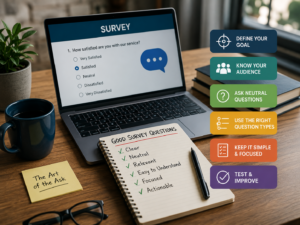
A good survey should be:
- Short and easy to complete
- Relevant to the customer experience
- Mobile-friendly
- Personalized when possible
- Focused on actionable insights
The goal is to collect meaningful feedback without creating survey fatigue.
8. Can Customer Satisfaction Surveys improve customer retention?
Yes. Businesses that actively listen to feedback and improve customer experiences based on survey insights often see stronger customer loyalty and higher retention rates.
9. What are common mistakes businesses make with Customer Satisfaction Surveys?
Common mistakes include:
- Asking too many questions
- Sending surveys too frequently
- Ignoring customer feedback
- Using generic questions
- Failing to act on survey insights
Collecting feedback without making improvements can reduce customer trust.
10. What is the future of Customer Satisfaction Surveys?
The future of Customer Satisfaction Survey 2026 strategies includes AI-powered automation, conversational surveys, predictive analytics, voice feedback systems, and continuous customer listening experiences.