- 8 min read


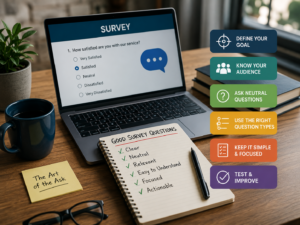

The way businesses collect feedback has changed dramatically over the past few years. Companies today operate in a fast-moving digital environment where customer expectations evolve quickly, decisions need to happen in real time, and data has become one of the most valuable business assets. In this new landscape, many traditional Online Survey Tools are struggling to keep up.
What once worked well for simple questionnaires and basic market research is now becoming outdated. Static forms, manual analysis, and slow reporting processes no longer meet the demands of modern businesses that rely on speed, automation, and intelligent insights.
As organizations increasingly adopt AI-driven workflows, the gap between old survey systems and modern feedback platforms continues to grow. Businesses are no longer just looking for tools that collect responses—they want systems that help them understand behavior, predict trends, and make faster decisions.
This shift is redefining the future of Online Survey Tools.
The Problem with Traditional Online Survey Tools
Traditional Online Survey Tools were designed during a time when surveys were relatively simple. Businesses would create a form, send it through email, wait for responses, and manually analyze the results later. While this process still works for small-scale use cases, it creates major limitations in today’s digital economy.
One of the biggest issues is speed. Modern businesses operate in real time, but traditional survey systems are often slow and disconnected from daily workflows. By the time insights are analyzed, customer behavior may have already changed.
Another major problem is the lack of personalization. Older survey platforms typically send the same questions to every user, regardless of their behavior, preferences, or history with the brand. This creates generic experiences that reduce engagement and often lead to lower-quality responses.
In addition, many traditional systems require heavy manual effort for setup, distribution, reporting, and interpretation. For teams that already manage multiple digital tools and workflows, this creates unnecessary complexity and inefficiency.
Modern Businesses Need Real-Time Insights
Today’s businesses can no longer afford to wait days or weeks for actionable insights. Whether it’s a SaaS company monitoring user onboarding, an e-commerce brand tracking customer satisfaction, or a remote team measuring employee engagement, feedback must be immediate and actionable.
Modern Online Survey Tools are evolving to support this demand. AI-powered systems can now collect responses in real time, identify trends instantly, and generate automated summaries that help teams act faster.
This shift is especially important in competitive industries where small delays can impact customer retention, product performance, and revenue growth.
Real-time feedback is no longer a luxury—it has become a business necessity.
The Rise of AI-Powered Survey Platforms
Artificial intelligence is changing the entire survey industry. Instead of relying on static forms and manual workflows, modern survey platforms are becoming intelligent systems that can automate and optimize every stage of data collection.
AI-powered Online Survey Tools can now:
- Generate surveys automatically based on user goals
- Personalize questions for different audiences
- Analyze sentiment and response patterns
- Detect low-quality responses
- Provide instant insights and recommendations
This level of automation allows businesses to focus less on managing surveys and more on using data strategically.
AI is also improving the overall user experience. Surveys are becoming shorter, more conversational, and more relevant to respondents, which helps increase engagement and completion rates.
Why User Experience Matters More Than Ever
One of the biggest reasons traditional survey systems are losing effectiveness is poor user experience. Modern users expect smooth, mobile-friendly, and personalized digital interactions. Long, outdated forms with repetitive questions often feel frustrating and time-consuming.
Today’s consumers are surrounded by apps and platforms that deliver instant and intuitive experiences. As a result, expectations for surveys have changed as well.
Modern Online Survey Tools are now focusing heavily on user-centric design. Features like conversational surveys, adaptive question logic, and mobile-first interfaces make surveys feel less like tasks and more like natural interactions.
This improved experience directly impacts response quality and engagement.
Integration Is Becoming Essential
Another weakness of older survey systems is their inability to integrate seamlessly with modern business tools. Businesses today rely on CRMs, analytics platforms, marketing automation systems, and collaboration tools to manage operations.
Traditional survey platforms often operate in isolation, forcing teams to manually export and transfer data between systems.
In contrast, modern Online Survey Tools are built with integration in mind. Survey data can automatically sync with customer profiles, dashboards, and workflow systems in real time. This creates a connected ecosystem where feedback becomes part of everyday business operations rather than a separate process.
The ability to integrate feedback directly into decision-making workflows is becoming a major competitive advantage.
The Shift Toward Continuous Feedback
Traditional surveys were often one-time events. Businesses would run a survey once every few months and use the results to guide future decisions. However, this approach no longer matches the speed of modern markets.
Businesses today need continuous feedback. Customer expectations change quickly, and companies need ongoing visibility into user sentiment and behavior.
Modern Online Survey Tools are increasingly designed around continuous listening models. Instead of waiting for scheduled surveys, businesses can now collect feedback at key moments throughout the customer journey.
For example:
- After a product purchase
- During onboarding
- Following customer support interactions
- After feature usage
- During employee performance cycles
This continuous approach creates more accurate, real-time insights that businesses can act on immediately.
Data Quality Is Becoming More Important Than Data Quantity
Collecting large amounts of data is no longer enough. Businesses now care more about the quality and relevance of feedback.
Traditional survey systems often struggle with low engagement, incomplete responses, and survey fatigue. Modern AI-driven platforms address these issues by optimizing question flow, reducing unnecessary questions, and detecting suspicious or low-quality responses automatically.
As a result, businesses receive cleaner and more actionable data.
This is one of the key reasons why modern organizations are moving away from outdated survey systems toward smarter Online Survey Tools powered by AI and automation.
What’s Next for Online Survey Tools?
The future of Online Survey Tools is moving toward even deeper automation and intelligence. Surveys are becoming more conversational, predictive, and integrated into everyday digital experiences.
In the coming years, we can expect:
- Voice-based and chat-style surveys
- Predictive feedback systems powered by AI
- Emotion and sentiment detection
- Fully automated survey optimization
- Advanced personalization based on behavioral data
Surveys may eventually evolve into invisible feedback systems that collect insights naturally without interrupting the user experience.
This next generation of survey technology will help businesses understand users faster, more accurately, and more intelligently than ever before.
Final Thoughts
Traditional survey systems helped businesses collect feedback for many years, but the digital landscape has changed. Modern organizations now need faster insights, better personalization, real-time analytics, and seamless automation.
That is why outdated survey platforms are struggling to meet current business demands.
The future belongs to intelligent, AI-driven Online Survey Tools that can adapt to users, automate workflows, and turn raw feedback into actionable business intelligence.
Businesses that embrace this shift early will be better positioned to understand their audiences, improve customer experiences, and stay competitive in an increasingly data-driven world.
Frequently Asked Questions (FAQ)
1. What are Online Survey Tools?
Online Survey Tools are digital platforms that help businesses create, distribute, and analyze surveys to collect feedback, customer insights, market research data, and employee opinions.
2. Why are traditional Online Survey Tools becoming outdated?
Traditional Online Survey Tools often rely on manual workflows, static questions, and delayed reporting. Modern businesses now need AI-powered automation, real-time insights, and personalized survey experiences.
3. How do modern Online Survey Tools improve data collection?
Modern Online Survey Tools use AI, automation, and analytics to create smarter surveys, improve response quality, and generate instant insights for faster decision-making.
4. Are AI-powered Online Survey Tools better for businesses?
Yes. AI-powered Online Survey Tools help businesses save time, automate repetitive tasks, personalize surveys, and improve customer engagement through smarter data collection.
5. Can Online Survey Tools increase customer engagement?
Yes. Personalized and mobile-friendly Online Survey Tools create a better user experience, which helps improve participation and engagement rates.
6. What features should businesses look for in Online Survey Tools?
Businesses should look for automation, AI-powered survey generation, mobile optimization, analytics dashboards, integrations, and real-time reporting features.
7. Are Online Survey Tools useful for small businesses?
Absolutely. Small businesses can use Online Survey Tools to collect customer feedback, improve products, understand market trends, and make data-driven decisions without large research budgets.
8. How important is AI in modern Online Survey Tools?
AI is becoming a major part of modern Online Survey Tools because it helps automate survey creation, optimize questions, analyze responses, and deliver faster insights.
9. Can Online Survey Tools integrate with other business software?
Yes. Many modern Online Survey Tools integrate with CRM systems, marketing platforms, analytics software, and customer support tools to streamline workflows.
10. What is the future of Online Survey Tools?
The future of Online Survey Tools includes AI-driven automation, conversational surveys, predictive analytics, voice-based feedback systems, and real-time customer intelligence.