- 6 min read

Introduction
A survey in human research is a common tool to collect information from people. It is used to understand opinions, behaviors, experiences, and needs. Researchers use surveys because they are simple and effective. A survey allows them to collect data from many people in a short time. It also helps in making clear comparisons between groups.
The purpose of a survey in human research goes beyond simple questions and answers. It is a structured way to gather insights that can improve health, education, business, and society. In this article, we will explore why surveys are important in human research, how they are used, and the benefits they provide.
What is a Survey in Human Research?
A survey in human research is a method that involves asking questions to a group of people. The goal is to collect information about thoughts, feelings, actions, or conditions. Surveys can be done online, on paper, face-to-face, or over the phone.
In research, surveys are not just casual questions. They are designed carefully to reduce bias. Each question has a clear purpose. The data from the survey is then analyzed using survey analysis techniques to find patterns or trends. This makes surveys a trusted source of scientific information.
Why Do Researchers Use Surveys?
Researchers use surveys for many reasons.
- To collect large amounts of data
A survey can reach hundreds or even thousands of people. This makes it easier to understand broad social patterns. - To understand human behavior
A survey in human research helps to study what people think and how they act. - To save time and resources
Compared to interviews or experiments, surveys are faster and cheaper. - To compare different groups
Surveys allow researchers to study differences between age groups, gender, education levels, or regions. - To make evidence-based decisions
Policy makers, educators, and healthcare workers use survey results to improve systems.
The Purpose of a Survey in Human Research
The main purpose of a survey in human research is to gather reliable data about people. But this purpose can be divided into several goals.
1. Understanding Public Opinion
Surveys give insight into what people think about issues. For example, health researchers may want to know how many people trust vaccines. Education researchers may want to understand how students feel about online learning. Public opinion collected through surveys guides better decision-making.
2. Measuring Behavior and Lifestyle
A survey in human research also measures what people do in their daily lives. It helps in understanding habits, routines, and lifestyle choices. For example, surveys are used to study smoking habits, exercise levels, or screen time. This helps researchers identify risks and suggest solutions.
3. Studying Experiences
Many surveys ask about personal experiences. This could be about visiting a doctor, attending school, or using a service. Experience-based surveys help researchers to know what works well and what needs improvement.
4. Evaluating Policies and Programs
Governments and organizations often use surveys to check if their policies are working. For example, after introducing a new health campaign, a survey can measure how many people benefited from it. This way, surveys help in evaluating success.
5. Predicting Future Trends
A survey in human research also helps predict future needs. By analyzing current opinions and behaviors, researchers can estimate how people may act in the future. For example, a survey about environmental awareness can predict how people might adopt eco-friendly habits in the coming years.
Types of Surveys in Human Research
Surveys come in different forms depending on the purpose.
- Cross-sectional surveys
These surveys collect information at one point in time. They give a snapshot of the current situation. - Longitudinal surveys
These surveys follow the same group of people over time. They show how opinions and behaviors change. - Descriptive surveys
These surveys focus on describing a population’s characteristics, such as age, income, or education. - Analytical surveys
These surveys go deeper. They try to find out why people think or behave in a certain way.
When creating these surveys, following survey design best practices is essential to reduce bias and improve accuracy.
Advantages of Using Surveys
Surveys are popular because they offer many benefits.
- Efficiency: They collect information from many people quickly.
- Cost-effectiveness: Surveys are less expensive than experiments.
- Flexibility: Surveys can cover a wide range of topics.
- Standardization: Everyone answers the same questions, which makes results easy to compare.
- Quantitative analysis: Surveys provide numerical data that can be analyzed with statistics.
These advantages make surveys a practical choice for human research.
Limitations of Surveys in Human Research
While surveys are useful, they also have limits.
- Bias: People may not always answer honestly.
- Misunderstanding: Some questions may be unclear.
- Low response rates: Many people may ignore survey requests.
- Surface-level insights: Surveys often provide broad data but not deep explanations.
Researchers must design surveys carefully to reduce these issues.
Examples of Survey Use in Human Research
Surveys are used in many fields.
In Health Research
Surveys help track disease patterns, health behaviors, and patient satisfaction. For example, public health surveys measure vaccination rates or exercise habits.
In Education Research
Surveys collect information about student learning, teacher performance, and classroom experiences. For example, a school may use a survey to understand challenges in online learning.
In Social Research
Surveys study public opinion on politics, culture, or community life. For example, surveys can measure how people feel about social media or government policies.
In Business Research
Companies use surveys to understand customer satisfaction, market trends, and employee needs. This helps improve products and services.
How Surveys Improve Human Research
A survey in human research improves knowledge about society. It allows researchers to see patterns across large groups. It also gives a voice to people who may not otherwise be heard. When data from surveys is combined with other methods, research becomes stronger and more reliable.
For example, surveys about mental health can highlight issues that need urgent attention. Surveys about education can show where students are struggling. Surveys about social issues can guide governments to create fair policies.
The Future of Surveys in Human Research
With technology, surveys are becoming more advanced. Online surveys reach global audiences within minutes. Mobile surveys allow people to respond anywhere. Artificial intelligence is helping to design smarter surveys and analyze results quickly.
The purpose of a survey in human research will remain the same: to understand people better. But the methods will become more digital, interactive, and accurate. This will make surveys even more important in the future of research.
Conclusion
The purpose of a survey in human research is to collect meaningful data about people. Surveys help researchers understand opinions, behaviors, and experiences. They support health studies, education research, social science, and business growth.
Surveys are powerful because they bring the voice of many people into research. They make it possible to see broad patterns and predict future trends. While they have limits, careful design makes them highly effective.
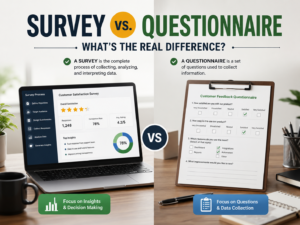
In today’s world, where decisions should be evidence-based, surveys are more important than ever. They connect researchers with society and provide data that improves life. A survey in human research is not just a questionnaire—it is a bridge between people and knowledge.